Huawei Xu Zhijun: If the United States continues to block it, we may not be able to win.
Summary: On Thursday, U.S. time, Huawei warned that if Washington continues to block the company from entering the U.S. market, the United States may not be able to achieve its next goals, the CNBC website reported.
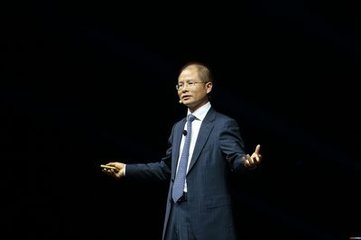
According to the CNBC website, Huawei warned on Thursday, U.S. time, that if Washington continues to block the company from entering the U.S. market, the United States may not be able to realize its ambition to lead the world in the next-generation mobile Internet era.
The next generation of mobile internet, known as "5G" technology, will allow consumers to download movies in seconds and support infrastructure such as smart cities that require large amounts of data. The United States and China are both vying to become leaders in this area.
But Huawei, the world's largest network equipment manufacturer, has been banned from entering the U.S. market since 2012. Xu Zhijun, Huawei's rotating chairman, said in an interview with CNBC on Thursday, U.S. time, that the U.S. move could harm the country's ambition to be at the forefront of next-generation technology.
He said: "For Huawei, as a leader in 5G technology, we have no opportunity to provide 5G solutions and services to American consumers. This shows that the US market is a market without sufficient competition and is still preventing leading companies from participating in the market." Now, I'm not sure if they can truly achieve their goal of becoming the world's number one in the 5G era. ”
Xu Zhijun stressed that preventing Huawei from entering the 5G market means less competition, which may lead to consumers paying higher phone bills and telecom companies having to increase spending.
He said: “Without the participation of 5G technology leaders and without sufficient competition, telecom companies will have to spend more money to purchase 5G equipment in order to deploy networks. Consumers will have to pay more to get 5G service, and the quality won't be as good as in other markets with leading players.
In 2012, the U.S. government banned China's Huawei and ZTE from selling network equipment in the United States on the grounds of national security. Washington says the companies' equipment could provide the Chinese government with a backdoor into U.S. telecommunications networks.
Huawei and ZTE have repeatedly denied this claim.
Meanwhile, the U.S. government is trying to apply more pressure. Last week, the Wall Street Journal reported that the U.S. government was trying to persuade mobile carriers in allied countries to avoid using Huawei equipment.
Xu Zhijun said that political factors may have played a more important role than actual security issues.
He said: “There is a question that has been lingering in my mind. As a national authority, why does the US government keep targeting Huawei as a commercial company? Is it because we are doing too well in 5G, or is there a reason that I am not sure about? If 5G will bring about network security problems, I think these remarks are politically motivated and have no factual basis at all. All these suspicions have no solid factual basis. ”
In addition, Huawei has been banned from selling 5G equipment in Australia, while New Zealand regulators rejected a proposal by a telecommunications company in the country to use Huawei equipment. Despite these disadvantages, Xu Zhijun said that Huawei will not seek help from the Chinese government to solve these problems.
He said: "Huawei has not and will not seek help from the Chinese government to deal with the challenges we face. We will rely on ourselves, our good products, and our good services. Even if some countries don't choose us, we will be fine. But I trust the wisdom of governments around the world. I'm sure they know what they want and what they don't want. ”
Xu Zhijun pointed out that his company has received support from the British telecommunications industry. Last week, BT chief architect Neil McRae claimed that Huawei was "the only true 5G supplier" and that other companies needed to catch up. Nokia, Ericsson and Samsung are all Huawei's competitors in the mobile network field. Last week, Huawei announced that it had signed 22 commercial contracts involving 5G technology around the world.
As for the advantages of 5G, while others have been expressing concerns about cybersecurity and espionage, Huawei says its 5G technology is more secure than the current state-of-the-art 4G networks. In an interview with CNBC on Thursday, Xu Zhijun explained how 5G technology ensures security. He said that one reason why 5G is more secure is that the way this technology encrypts data is very advanced. If hackers want to cause damage, they need a "quantum computer."
The Huawei executive praised the European Union's data protection regulations, the General Data Protection Regulation (GDPR) that came into effect in May. The law requires companies that process data to adopt very strict data protection standards or risk hefty fines. As large amounts of data are expected to be transmitted over 5G networks, GDPR may become even more important to the business world.
Xu Zhijun said that he "highly appreciates" the GDPR regulation.
He told CNBC: “It should be a model for other countries because it sets standards and guidelines. As long as we comply with these regulations, we can do business. ”
Although 5G is widely expected to be the future of data networks, only a few telecom operators around the world have announced plans to launch the technology.
[Source: NetEase Technology]


-
 It’s not easy to socialize, so2019-11-20 14:32:45If you don’t know what to do to start a business, just do so...
 -
 Huawei Xu Zhijun: If the Unite2019-11-20 14:32:43On Thursday, U.S. time, Huawei warned that if Washington con...
 -
 Xiao Zha returned to his alma2019-11-20 14:32:45According to foreign media reports, Mark Zuckerberg, the hea...
 -
 The short video industry is ra2019-11-20 14:32:45Su Fu, an international student from Tajikistan, is an Inter...
 -
 Traffic fraud is at stake, and2019-11-20 14:32:45During this year’s Two Sessions, the celebrity committee mem...
 -
 Sports short videos are rising2019-11-20 14:32:45On January 20, 2019, the Asian Cup quarterfinals battle bega...